
Ray tracing has quickly become a staple of modern AAA gaming, with its ability to transform lighting, shadows, and reflections into something almost lifelike. So when word dropped that Battlefield 6 will launch without it, eyebrows were raised. After all, this is a flagship franchise known for pushing technical boundaries. But the decision wasn’t made in haste: it was intentional, and for a pretty good reason: performance.

Performance first, fancy graphics later?
Battlefield has always been about scale. Massive maps, destructible environments, and chaotic firefights involving dozens of players at once: it’s the very DNA of the series. In a recent interview with ComicBook, Christian Buhl, studio technical director at Ripple Effect, explained why ray tracing didn’t make the cut. Quite simply, the team wanted to “focus on performance.”
According to Buhl, the choice to scrap ray tracing wasn’t a late compromise but something decided “relatively early on” in development. The team wanted to ensure Battlefield 6 was optimised for its “default settings and default users,” rather than chasing cutting-edge but resource-heavy visuals. This way, whether you’re running the game on default settings or tinkering with advanced options, smooth frame rates remain a consistent priority across the board.
Why skip ray tracing in 2025?
Let’s put it into perspective. Ray tracing looks stunning when implemented well: it breathes life into light sources, makes puddles shimmer with real-world reflection, and can make a night map feel eerily immersive. But it comes at a serious cost. Even the most powerful GPUs today can struggle under its weight, especially at higher resolutions and frame rates.
MORE BATTLEFIELD 6


And Battlefield isn’t just any game. It’s a high-octane FPS where performance can mean the difference between victory and a scoreboard you’d rather not screenshot. Competitive players value frame rate over fidelity, because responsiveness trumps aesthetics when your squad’s survival is on the line. DICE and Ripple Effect, then, weren’t just being practical — they were playing to the strength of Battlefield’s community: multiplayer mayhem with consistency in gameplay.
The Bigger Picture: Battlefield vs Call of Duty
The timing of this choice is also intriguing. Battlefield 6 officially launches on October 10, landing it just a month before Call of Duty: Black Ops 7 drops on November 14. The rivalry couldn’t be more intense. Both franchises are angling to dominate the shooter landscape, and technical decisions like these will quietly shape the player experience. Where Call of Duty has often leaned toward sharp visuals and cinematic flair, Battlefield is doubling down on scale and performance.
Interestingly, Battlefield’s open beta back in mid-August already broke records, showing remarkable interest from fans despite the absence of ray tracing. For the series veterans, fluid gameplay in hectic multiplayer brawls is what matters most, not how pretty the reflections look in a puddle outside a bombed-out skyscraper.
What this means for players
If you’re a graphics-first kind of gamer who lives for bleeding-edge tech, this may feel like a missed opportunity. But if you care about squeezing every drop of responsiveness from your rig — or even if you’re still rocking an older setup — this is good news. Skipping ray tracing ensures that Battlefield 6 will run smoother across platforms, giving more players access to high frame rates without having to pin their hopes on expensive GPU upgrades.
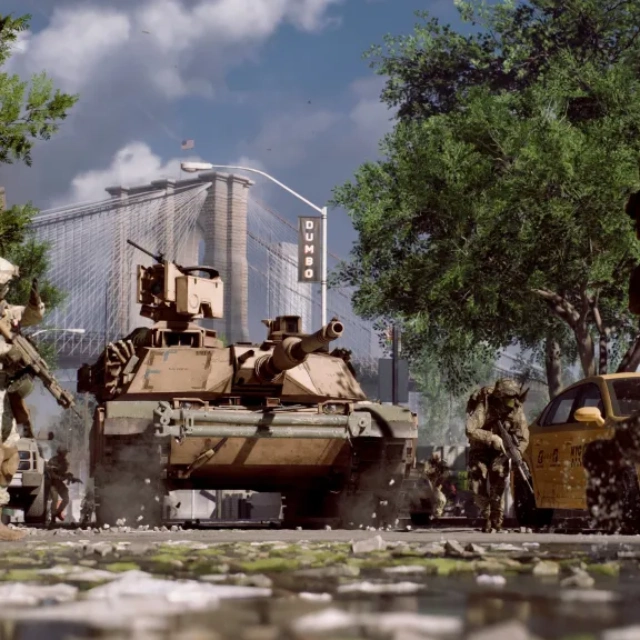
So does Battlefield 6 really lose anything by skipping ray tracing? Honestly, probably not. For a game built around massive battles, team strategy, and twitch-fast reaction times, the last thing it needs is a performance trade-off that can turn silky-smooth chaos into stuttering frustration.
Skipping ray tracing might initially sound like Battlefield 6 is falling behind, but in reality, it’s a decision that aligns perfectly with its player base. The vast majority of fans don’t boot up Battlefield to marvel at shadows: they’re here to dominate the frontlines. With launch just around the corner, it’ll be fascinating to see how this no-ray-tracing approach stacks against Call of Duty’s visual offerings when both shooters go head-to-head this holiday season.