
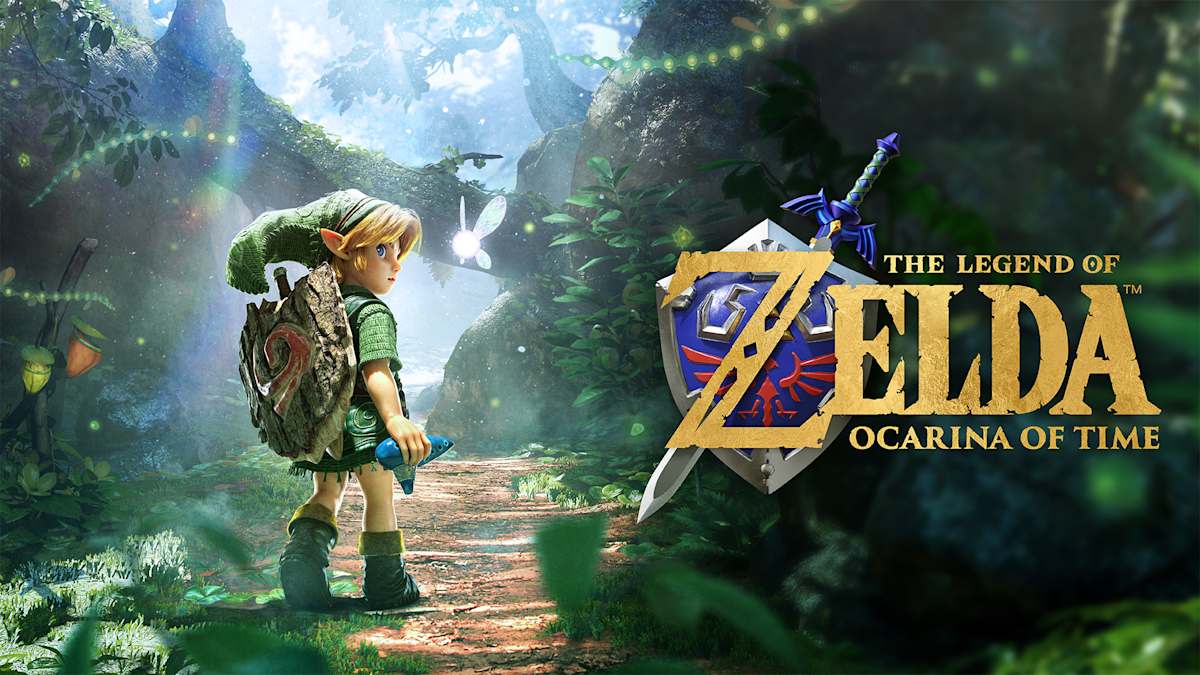
Twenty-eight years after it taught a generation how 3D adventure games should work, The Legend of Zelda: Ocarina of Time is back, and the critics have nearly run out of superlatives. Nintendo’s full Switch 2 remake launched on 5 November with a 96 Metascore on Metacritic, which makes it the highest-rated game released this year. For anyone who grew up blowing dust out of N64 cartridges, that’s a strange and rather lovely sentence to write.
The reviews also share a complaint. The remake doesn’t include Master Quest, the remixed, tougher version of the game that veterans have treated as Ocarina’s real final exam since the GameCube days. And as of this weekend, dataminers say traces of it are sitting inside the game’s files.
What Nintendo has actually released
This isn’t a remaster with sharper textures. Nintendo Australia describes it as a remake rebuilt for Nintendo Switch 2, with completely overhauled visuals, fully voiced cutscenes, expanded character dialogue, a symphonic orchestral score and reworked camera and movement controls. The story is the same: Link, Ganondorf, the Triforce and a quest split between childhood and adulthood across two eras of Hyrule.
The ocarina gets the most charming new trick. Play, or simply hum, one of Link’s learned melodies near the Switch 2’s built-in microphone and he’ll perform it in-game, and Nintendo says the game also responds to real instruments. It’s very Nintendo: a gimmick that sounds silly on paper and will absolutely be someone’s favourite memory of the game.
Outside the game, a companion service called Zelda Notes in the Nintendo Switch App lets players track progress, share ocarina melodies and take a daily quiz drawn from more than 2,000 questions. New Young Link and Young Zelda amiibo arrive in 2027 and unlock masks with a retro graphical style, while other Zelda amiibo give useful items.
In Australia the game carries a PG classification for mild threat and violence. Nintendo’s suggested retail prices are AU$94.95 digital and AU$109.95 physical (NZ$104.95 and NZ$119.95). It’s single-player only.
The frame rate fix nobody can argue with
Opinions on the new art direction will differ, but the technical upgrade is beyond dispute. The 1998 original was capped at 20fps, and Digital Foundry’s analysis, reported by GamesRadar, found it could dip into the 16fps range in larger environments. The 2011 3DS version raised that to 30fps. The Switch 2 version runs at 60fps, which Digital Foundry describes as very stable apart from tiny loading hiccups.
Anyone who has gone back to the N64 version on Nintendo Switch Online lately knows how much that matters. Hyrule Field at a locked 60 is a different place to the slideshow many of us accepted as magic in 1998.
Who made it, and why Nintendo went back
Nintendo developed the remake internally rather than handing it to an outside studio, as it did with the 3DS version. HokWai Ng directs, his first time leading a Nintendo project, with longtime series producers Eiji Aonuma and Hidemaro Fujibayashi producing.
Aonuma’s reasoning in Nintendo’s four-part Ask the Developer interview is more interesting than the usual anniversary talk. 2026 is the series’ 40th anniversary, but he also pointed out that many of today’s Zelda developers “have only experienced developing the more recent titles.” He hoped rebuilding Ocarina could trigger new insights the team carries into future games, and wanted players raised on Breath of the Wild’s open structure to experience a more carefully paced, traditional Zelda adventure.
That makes the remake an internal training exercise as well as a product. If the next mainline Zelda feels more authored and dungeon-driven than Tears of the Kingdom, this project may be part of the reason.
What the critics loved, and where they pushed back
The praise is close to unanimous on presentation. Nintendo Everything called it Nintendo’s most impressive remake ever and one of the best games on Switch 2, and noted that it leans into the original’s creepier side: ReDeads are more unnerving than ever and Stalchildren claw their way out of the ground, a deliberate change after the 3DS version softened that edge.
The criticisms are just as consistent. Reviewers repeatedly describe it as a very safe remake that veterans won’t find challenging, flag the missing Master Quest, and at least one noticed image softness in handheld play. The character redesigns divide people too. NPR’s reviewer felt the translation was an upgrade almost all of the time but occasionally drifted into the uncanny valley, singling out Nabooru’s new look.
Nintendo Life, which gave the game a 9, put it plainly: without Master Quest it falls short of definitive, but it’s still a must-buy for Switch 2.
The Master Quest mystery
Master Quest has a history of turning up as a bonus. It first shipped on a special GameCube disc and later returned as an unlockable in Ocarina of Time 3D, so plenty of players assumed it would unlock after the credits on Switch 2. It doesn’t.
Then the dataminers got in. As Nintendo Everything reports, dataminer MrCheeze found multiple “MQ” references in the game’s files, including strings such as HasMQ, IsMQModeExist, NewGameMQ and ReleaseMQ. A second dataminer, OatmealDome, reported that the data suggests Master Quest unlocks through owning DLC rather than a free update, with a mirrored world and modified dungeons.
Treat that carefully. Datamined strings show what was built or considered, not what Nintendo will sell. They could be leftovers from development. Asked about Master Quest by IGN, Aonuma neither confirmed nor ruled it out: “I don’t think that we would announce anything specific at this time.”
Our read: the files point to Master Quest as paid DLC, and Nintendo has form here, having sold an expansion pass for Fire Emblem: Fortune’s Weave on Switch 2 only last month. If Master Quest arrives at a fair price, veterans finally get the challenge the critics say is missing. If it costs more than a modest add-on for content that was a free unlockable on 3DS, expect fans to make their feelings known.
Every version of Ocarina of Time
| Version | Platform | Year | Notes |
|---|---|---|---|
| Original | Nintendo 64 | 1998 | 20fps cap, Metacritic 99 |
| Master Quest | GameCube | 2002 | Remixed dungeons on a bonus disc |
| Ocarina of Time 3D | Nintendo 3DS | 2011 | Developed by Grezzo, 30fps, Master Quest unlockable |
| Remake | Nintendo Switch 2 | 2026 | Rebuilt in-house, 60fps, voiced cutscenes, no Master Quest at launch |
Should you buy it?
If you’ve never played Ocarina of Time, or only know Zelda from Breath of the Wild onwards, this is the easiest recommendation of the year. It’s the classic structure with modern controls and nothing in the way.
If you’ve finished it on N64 and again on 3DS, the decision is harder. You’re paying close to a hundred dollars for a gorgeous, smoother version of a quest you know by heart, with the veteran’s mode missing for now. Many will buy it anyway. In the UK it has already delivered the country’s second-biggest Zelda launch ever and the biggest physical game launch of 2026. Nostalgia, it turns out, still plays a mean ocarina.