
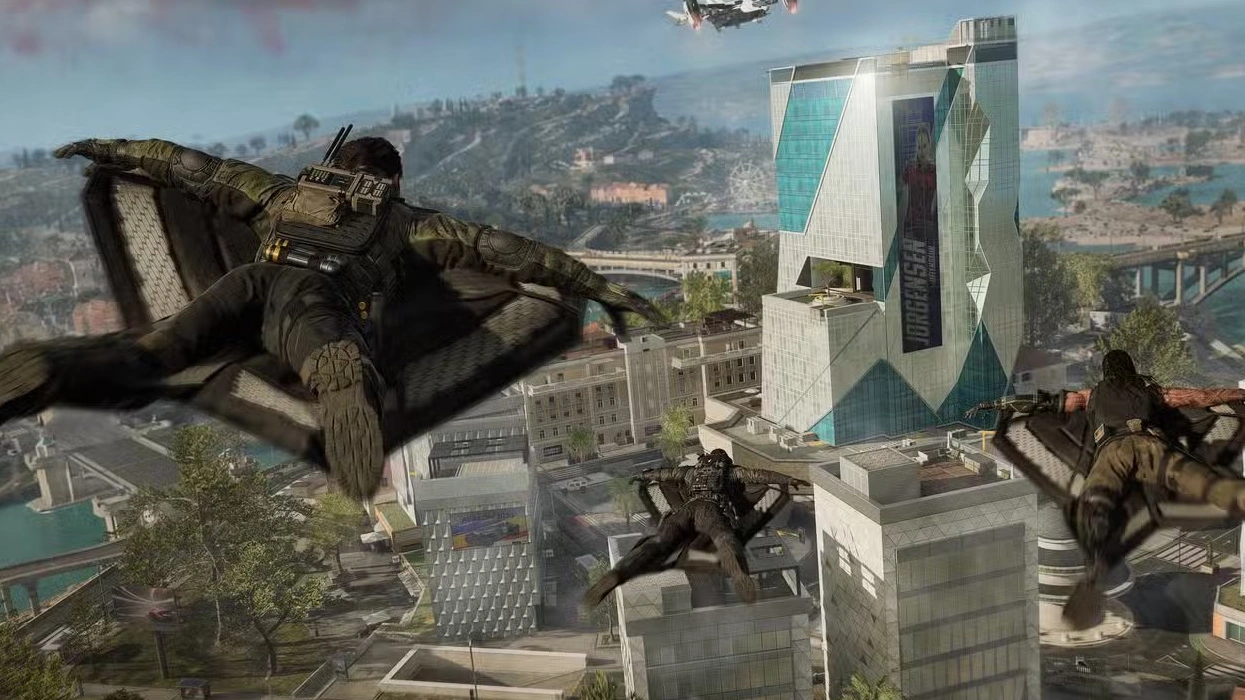
Brazil’s Ministry of Justice and Public Security has asked the country’s data protection authority, the ANPD, to prioritise checks on six games that sell loot boxes. Call of Duty, NBA 2K26 and Counter-Strike 2 are on the list. The ministry’s concern is simple: children in Brazil can still buy paid random rewards in them, despite a law that’s meant to stop exactly that.
Nothing has been banned, and no publisher has been found in breach. But with full enforcement and fines starting in January 2027, this is the clearest signal yet that one of gaming’s biggest markets intends to make the rules bite.
The six games
| Game | Publisher | The loot box mechanic flagged |
|---|---|---|
| Counter-Strike 2 | Valve | Weapon skin cases opened with paid keys |
| Call of Duty | Activision | Paid random rewards |
| NBA 2K26 | 2K | Random player card packs in MyTEAM |
| WWE 2K26 | 2K | Random card packs |
| Genshin Impact | HoYoverse | Paid “wishes” for random characters and items |
| PUBG Mobile | Krafton / Tencent | Paid random crates |
The request comes from Technical Note 55/2026, published on 15 October by the ministry’s National Secretariat for Digital Rights. It reviewed 15 popular games and franchises available in Brazil and flagged these six because their loot boxes remained available without the age-protection measures the ministry considers sufficient.
The note makes a pointed distinction. All six already carry an 18+ age classification in Brazil, but according to the ministry, an 18+ rating, risk warnings and published drop rates don’t substitute for the protections the law requires. A label saying “adults only” doesn’t stop a 14-year-old buying the boxes.
The ministry was careful to call its review preliminary and non-exhaustive. On its own, it doesn’t establish that any publisher has broken the law. That’s now for the ANPD to determine.
The law behind it
Brazil’s ECA Digital (Law 15.211/2025), the digital extension of its Statute of Children and Adolescents, was passed in September 2025. Its Article 20 bans paid loot boxes in games aimed at children and teenagers, or likely to be played by them. A decree from March 2026, 12.880/2026, gives publishers three ways to comply:
- verify players’ ages and block loot boxes for anyone under 18
- release a version of the game without loot boxes
- switch loot boxes off by default for players in Brazil
None of the three requires loot boxes to disappear for adults. This is a child-protection law, not a gambling ban.
Penalties: full enforcement begins in January 2027, with fines calculated at R$10 per affected user, up to R$50 million per infraction.
Why the ministry cares
The note summarises international research on loot boxes and young people. It says studies associate loot box spending with problem gambling behaviour, psychological distress, impulsivity and financial harm, while explicitly acknowledging that those associations don’t, on their own, prove a direct causal link to clinical disorders. That’s a careful, honest framing of a genuinely contested evidence base.
How Brazil compares with the rest of the world
Brazil isn’t acting alone, and the note cites measures in Belgium, Germany and Japan:
- Belgium treated paid loot boxes as illegal gambling from 2018, though enforcement has been patchy.
- Germany began factoring in-game purchases and loot boxes into age ratings in 2023.
- Japan banned the “kompu gacha” mechanic in 2012, after a backlash over children’s spending.
- Australia changed its classification rules in September 2024: games with paid loot boxes now receive a minimum M rating, and games with simulated gambling are rated R18+.
Brazil’s approach is stricter than Australia’s in one important way. Australia’s rules are about the age rating on the box; Brazil’s require publishers to actually stop minors buying loot boxes, with real age verification or a loot-box-free version. That puts the burden on the game, not the parent.
What it means for players
For now, nothing changes in any of the six games. The next steps are the ANPD’s monitoring and whether publishers adopt one of the three compliance options before January’s enforcement start. The most likely outcome, if Brazil follows through, is age verification for in-game purchases in Brazil, or loot boxes switched off by default for Brazilian accounts, rather than any game being pulled.
The bigger story is the direction of travel. Between Brazil’s law, Australia’s ratings and the age rating changes that hit EA Sports FC 27 in Europe, loot boxes are being regulated market by market, and publishers face a patchwork of rules. For more on the games involved, see our Call of Duty and NBA 2K hubs.